Showing posts with label sugar. Show all posts

Friday, January 21, 2011

Evolutionary Addictions

My friend Thea recently wrote an article about how stress sparks our desire to want something --anything-- to make us feel better.  It turns out that food -- sweets, specifically -- increase endorphins in our brain, and endorphins make us happy.  That's why we so often turn to food as comfort when we're stressed out.

Going with a Primal theme, Thea's article talks about how this chemical surge has existed since our hunter-gatherer days, and was necessary for our survival.  But given that over time, we've adapted to a sedentary lifestyle, our stressors are no longer "can we make the hunt today?  I hope the buffalo doesn't trample me," but instead are "am I going to make the deadline at work?" or "why is there morning traffic?"  These stressors are mostly mental, not physical, and as a result, our bodies do not need the "sugar/carb" rush that we seek, but we give into that desire anyway.  So, we end up gaining weight.
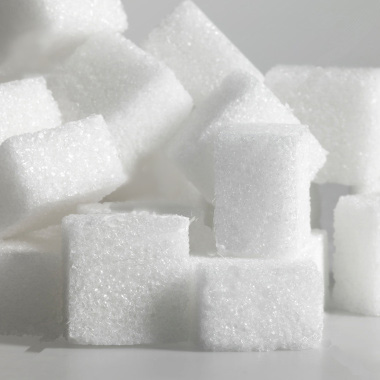


The good news -- when we stress, we can train our brains to want something else -- like exercise!  Thea also informs us that we should be aware of what we eat, and eat mindfully.  Instead of shoveling that bag of Doritos in our mouths to feel better, thinking about what we eat while we eat it makes a significant difference.

I like to think I am developing a healthy exercise addiction since I get incredibly cranky and antsy when I go without exercise.  Having a workout of the day makes a huge difference in my general outlook and attitude.

Speaking of workouts, here's my workout of the day from yesterday:

Run 1.2 miles (11 minutes for me, on the treadmill);
100 push ups
150 sit ups
200 squats

It was awesome.  Next time, I'll run another 1.2 miles after the squats.

I also like to think that I am kicking my sugar addiction (which researchers have discovered, sugar is more addictive than cocaine) by eliminating it from sneaky places like coffee creamers, marinades, and my personal favorite, hard cider.  It hasn't been easy, but I find that when I eat foods with a lot of sugar in them, they are far too sweet for me.  I've also been healthier this winter -- while my coworkers and family members have gotten nasty flus and colds, I've been relatively cold-free, which is highly unusual for me.  Pretty impressive, I think, especially since I'm a middle school teacher, which means that I work in a germ factory.  I'm still working on the sugar-free lifestyle, and for some motivation, I read this article from Men's Health. (Random aside: I love reading Men's Health, and renewed my husband's subscription because I look forward to it coming each month.  I find it far more helpful and interesting than Women's Health).

The more I read and the healthier I feel, the more convinced I am that sugar is bad news.

How do you handle stress?

Wednesday, January 19, 2011

The Biggest Loser?

Last night, I put on The Biggest Loser.  I have mixed feelings about the show, but I love Alison Sweeney, and  I'm interested to see the exercise and food philosophy the show has.
The snippet I watched had recipes from Curtis Stone.  I love trying new recipes, and was excited for this segment.  The acorn squash and arugula salad he made looked great!  But he lost me at the dessert, which was poached pears smothered in apple cider and fresh squeezed orange juice (from an actual orange -- not a can).  I can completely forgive Curtis for making a a recipe with juice, but then he made a comment to the contestant about what a great dessert this was, especially since there was no sugar in this recipe.  No sugar???  Are you kidding me???

Looking up New York Cider nutrition information,

Thirty grams of sugar in 8 ounces of cider.  Women are not supposed to consume more than 40 grams a day; for men, sugar consumption should be no more than 50 or 60 grams.  I'm sure I'll have more to say on The Biggest Loser in the future.

How can Curtis Stone claim there's no sugar in his recipe?  The Biggest Loser -- you lose big time for this one.  I'm disappointed that they are misleading and misrepresenting the food they cook.  

Tuesday, January 18, 2011

Low-Fat

As I've mentioned earlier, I rarely check food labels.  When I started rethinking my relationship with food this summer, I  neglected to pay attention to two important types of food: condiments and coffee creamer. (Condiments are still a work in progress).
For the past year or two, I've purchased Garelick Farms Non-Fat Half and Half.  I briefly questioned how half and half could be non-fat, but I never paid much attention to it.  I simply poured it in my morning cup of coffee and assumed non-fat = healthier for me, especially since it only had 20 calories per serving, where other creamers I saw had close to double.  And if I wanted to lose weight, my old mentality said I had to cut calories.  That's what nutritionists and magazines said, right?  Fat was the fad enemy of the day.
In my new quest to figure out how to eat well, I've realized that low-fat translates to higher amounts of additives in my food.  I'm also learning to love fats, and make sure I have olive oil and other healthy fats every day.  But for some reason, I kept on buying the non-fat half and half.  Old habits die hard, and I never thought much of it.
After picking up Food Rules, I saw that Rule #9 warns us to avoid foods that are low-fat or non-fat in nature.  Why?  It comes as no surprise, but these foods are chock-full of carbs, sugars, and salt to make sure these foods still taste good without fat.  And that means we consume more and gain weight.
But would lite half and half have sugar and salt?  Last week, I would have proclaimed, "no!"  But as a new saavy food consumer, I had a lightbulb moment: I went to my fridge to read the label of one of my staple products.


Corn syrup?  Artificial color?  Words I can't pronounce?  What was I putting in my body?  Garelick advertises the non-fat half and half as "delightfully delicious and good for your waistline, too."  How?  Disappointed, I ran back out to the grocery store and bought this instead:


And the most important part:


No sugar.  And ingredients I know and love.  And that I can pronounce (Pollan's Rule #7).  And it tastes great in my morning brew.  A win-win situation.

It's all about making small changes that are right for me, and I like Pollan's rules as guidelines for eating. Much of what he says seems like it should be common sense, but when you're used to eating a certain way for years, it's not always intuitive.

Have you swapped out any foods lately?

Wednesday, January 12, 2011

Me, fat?

This was precisely the question I asked myself when I stepped on the scale the summer between sophomore and junior year of college at the gym.
How could it be?  I occasionally worked out, I walked over a mile to get to work, and while I frequently indulged in the Starbucks mocha and the brownie, the exercise should burn that off -- right?  Calories in, calories out, or something like that.  Besides, I bought a lot of my groceries from Whole Foods, so didn't that mean I was automatically healthy?
Clearly, my denial and justification of my poor eating habits hurt me in the worst way, with a weight gain of nearly 25 pounds.  I was now considered overweight.
I'm apparently not the only one who's dealt with this dilemma.  According to msnbc.com, while 68 percent of Americans are overweight or obese, only 11 percent believe they are.
Part of the problem, the article cites, is that between the granola bars, 100 calorie packs, and fat free ice cream, we aren't eating healthy, even though we think we are.
One of the biggest problems is that we're eating too much sugar.  Sugar is measured in grams, and Americans (myself included) really have no idea how much a gram is.  Women aren't supposed to consume more than 40 grams of sugar in a day.  Hm.  Perhaps too much sugar contributed to my significant weight gain in college (although I'm sure other factors were involved).  But how am I doing now?  Do I still eat too much sugar?  To get some clarity, I decided to look in my fridge.  I've already made some steps to switch over the foods I eat, but I honestly don't check food labels the way I should.  So here goes a look at my Chobani yogurt...
Nine grams doesn't seem awful -- but given I put about a teaspoon of honey in my morning yogurt (which is about 8 grams of sugar), that's nearly half my sugar consumption at breakfast -- and that doesn't include the sugar in the fruit I add to it.  Yikes!
Wake up call.  I know I'm addicted to sugar, and I've been trying to cut back for the past six months.  Last week, I finally made the commitment to not put any sugar in my coffee.  I'm not going to lie -- I miss the sugar, but it gets easier every day.
Help me continue to cut out sugar!  Words of encouragement or thoughts on SAD (Standard American Diet) welcome.

Monday, January 3, 2011

Why Primal?

Lately, I've had some peers come up to me to ask me about my weight loss.  "What are you doing?" and "How did you do it?" are the common questions that I've gotten, and it makes me giggle to think that I unlocked some kind of magic formula to a healthier lifestyle.  In some ways, my eating habits and exercise routine have been pretty magical and intuitive, but I'd never describe the road as inherently easy.

I digress.  Anyway, I normally give a brief overview of what I've taken away from a Primal diet.  This is perhaps the easiest way for me to comprehend Primal eating, courtesy of Mark's Daily Apple:

I, however, am not that disciplined of a person, so I have adapted these principles as best I can.  I do my best to eat protein, healthy fats, lots of vegetables, fruit, but I do eat dairy (usually in the form of Greek yogurt and cheese with some half and half and sometimes milk).  I'm hardly the perfect example of Primal eating -- I do eat the occasional rice, soy and sweet potatoes and I have gluten in moments of weakness.  I'm a sucker for a decadent brownie or a good piece of cake, although for reasons I'll discuss later, my body is happier to avoid it.  And perhaps my biggest downfall of all is sugar (often in the form of honey).  But, my Primal lifestyle is a work in progress, and I'm figuring out what my body can and cannot handle.

After I explain the basics of a Primal diet to the inquiring party, I'm inevitably asked, "how could you give up gluten??  Why did you go Primal?"

That's a great question.  And it's a question that I don't have a single answer to, but I'll do my best.

First, I'm pretty sure I have an obsessive personality.  For awhile, I tried writing down everything I ate, whether that was in a food diary or online.  For me, it was disastrous.   Every single forkful I put in my mouth, I scrutinized and repeatedly beat myself up if I felt I was eating too much.  In the end, I rarely ended up losing weight, and I'm sure I wasn't getting enough nutrients/calories, etc.,. I needed.

After I got married and had gained back weight, I was putting in lots of hours at the gym, and trying to eat healthy (which included grains), and I wasn't losing any weight.  I was now in a vicious cycle, and I knew I needed a change.  I was at a breaking point of frustration.

When I started reading more about a Primal/Paleo lifestyle, it seemed liberating.  No counting calories/grams of fat/weighing food!  As long as I followed the main principles of Primal, I wouldn't need to have such a destructive system of recording my diet, and I stopped sabotaging myself, both mentally and physically.

For me, eating Primal is about eating clean.  It makes sense that I shouldn't put processed food and other junk in my body.   Eating fruits and veggies and meat makes sense to me.  Eating foods that are chock-full of hormones just doesn't seem right in my eyes.  If "you are what I eat," I'd rather be broccoli and chicken than McDonald's and high fructose corn syrup.  And historically, it does make sense to me that our bodies weren't meant to process grains.  Evolution is a long, long process.  And if we were, why are gluten-free diets and menu options becoming a mainstream part of our culture?  Maybe gluten-free is the current fad, but between celiac disease and other gluten allergies, there has to be some validity to leading a wheat free life.  (I know, I know, the same argument can be made for lactose intolerance.  But we can discuss that later).

I'm sure many people feel healthy with gluten in their diet, and in some ways, I am a little envious.  But at the same time, when I avoid gluten, my environmental allergies subside, and I don't have any GI or stomach problems that I typically have when I do eat grains.  I feel healthier.  And that's important to me.

And I think what finally made sense to me is that eating Primal is a lifestyle choice.  When I tried the Special K/Lean Cuisine/Fat Flush Plan diets, I found that it was all about dropping weight, and then reintroducing foods and calories.  But the moment I brought "normal" foods back into my diet, I gained weight.  For me, it isn't realistic to "diet."  Primal really allowed me to make a change holistically, for the better, and I do view it as my lifestyle.

I'd love to hear from you! Have you tried going "Primal" or another kind of diet/lifestyle change?  What foods make you feel healthy? What foods do you avoid (or try to?)